Recruitment scam alert: Brew Digital is being impersonated | Read more
Read more
The results are in: How Adapting for Tomorrow helped transform two AI Canadian-based startups
Share on socials
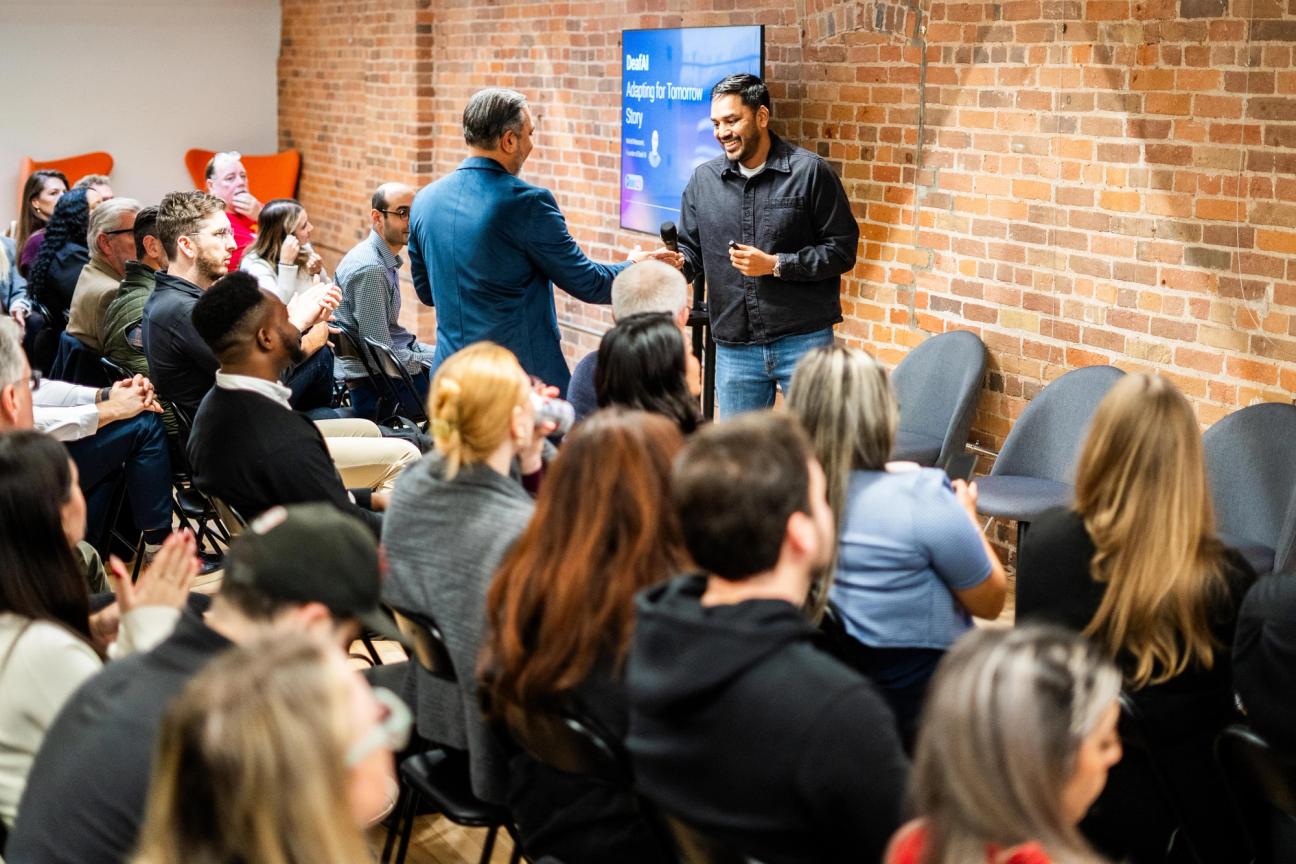
Harp Athwal addressing the audience
Photo of Harp Athwal
Harp Athwal
Published on 26 February 2026

The results are in: How Adapting for Tomorrow helped transform two AI Canadian-based startups

You may remember us launching in 2024 Adapting for Tomorrow, our AI startup incubator programme, which was an initiative we kickstarted out of our Canadian office.
Since we launched the program, we've had the pleasure of working with two Toronto-based startups: Deaf AI and FastDoc. These exciting companies, each with a unique vision, have leveraged the Adapting for Tomorrow program to help pivot their go-to-market strategy, build out their networks, reach new customers and opportunities, and evolve their product offering.
The results speak for themselves, and they demonstrate the incredible community both internally with The Adaptavist Group but also externally with our partners and customers, as well as exactly what's possible when startups gain access to the right ecosystem. Let's dive in.

The right network at the right moment

For early-stage startups with small teams and limited resources, having access to the right communities early on can be transformative. This proved true for FastDoc and DeafAI—by tapping into our ecosystem, both companies achieved organic growth and secured enterprise opportunities, all without dedicated sales teams. Their success stemmed primarily from visibility at community events hosted by Atlassian and AWS, as well as through our internal Speakeasy sessions, where they had the opportunity to showcase their solutions to our wider network.
Mayank Agarwal, co-founder of FastDoc, is building an automated communications platform that transforms agile team documentation by converting Jira data into comprehensive project documents.
The company has seen tremendous momentum, evolving from a small customer base and minimal revenue to a full commercial product. When we concluded the program at our closing ceremony, the results for Mayank and his team were clear: FastDoc has achieved 400% ARR growth and a 2.5 times increase in paid customers since joining the program.
Looking ahead, FastDoc is positioning itself as a standalone SaaS, expanding beyond Atlassian to integrate with GitHub, Slack, and other platforms to serve industries with complex communication challenges.
The momentum from community and network-building played an equally vital role for Deaf AI. Founded by Mehdi Masoumi, Deaf AI is developing digital humans as real-time sign language interpreters to help the hard-of-hearing navigate busy public spaces like airports and transit stations.
The past year has seen them hurdle strategic challenges to diversify their market across Canada, the UK, and Europe from the United States. When the team joined the program, they started with a bold idea, one proof of concept, and a small network.
Since then, they have successfully launched a pilot at Waterloo International Airport and are planning launches at TTC and Billy Bishop Airport. Their selection for the Heathrow Lift Off program and user testing at Gatwick has solidified their presence in the transportation sector and built connections with major international airports.
Beyond transit, they are now engaging with the Olympic Broadcasting Services and CBC Sports to bring their technology to the world of live broadcasting. Over the next 12 months, they plan to expand their sign language capabilities to 26 languages.
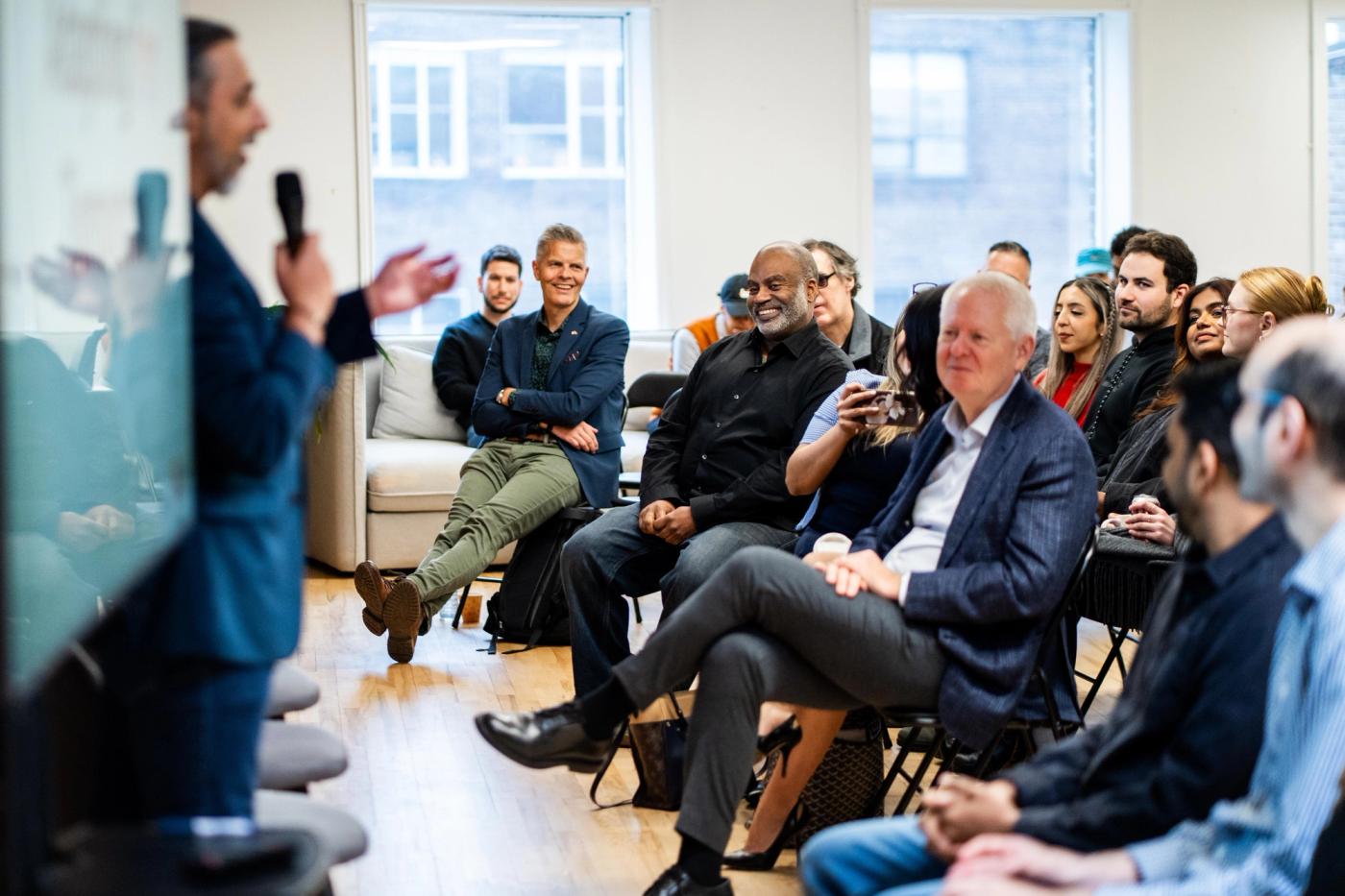
Mayank Agarwal co-founder of FastDoc and Harp Athwal addressing the audience

Insights and impact

The successes of the Adapting for Tomorrow program haven't just been felt by the startups. For us, too, the initiative has provided fresh perspectives on generative AI and further boosted our own ecosystem here in Toronto.
Throughout the program, we hosted investors, founders, and industry leaders spanning various sectors, all with AI at the forefront of their innovation. Our Toronto office became a hub for the local technology community, including some familiar faces from Toronto Global, helping international businesses expand into the Toronto region and support the overall growth of the industry.
We also met many new faces—rising talent and startups shaping Toronto's tech scene. Early-stage companies, including Rootly and Atolio, joined us at our community hub, which convened the full spectrum of Toronto's ecosystem: from students launching their careers to seasoned entrepreneurs to leaders from organisations like TD Bank and AWS.
We're proud to be building a community that unites people at the heart of Toronto's AI startup scene, something we're excited to continue in the upcoming year.
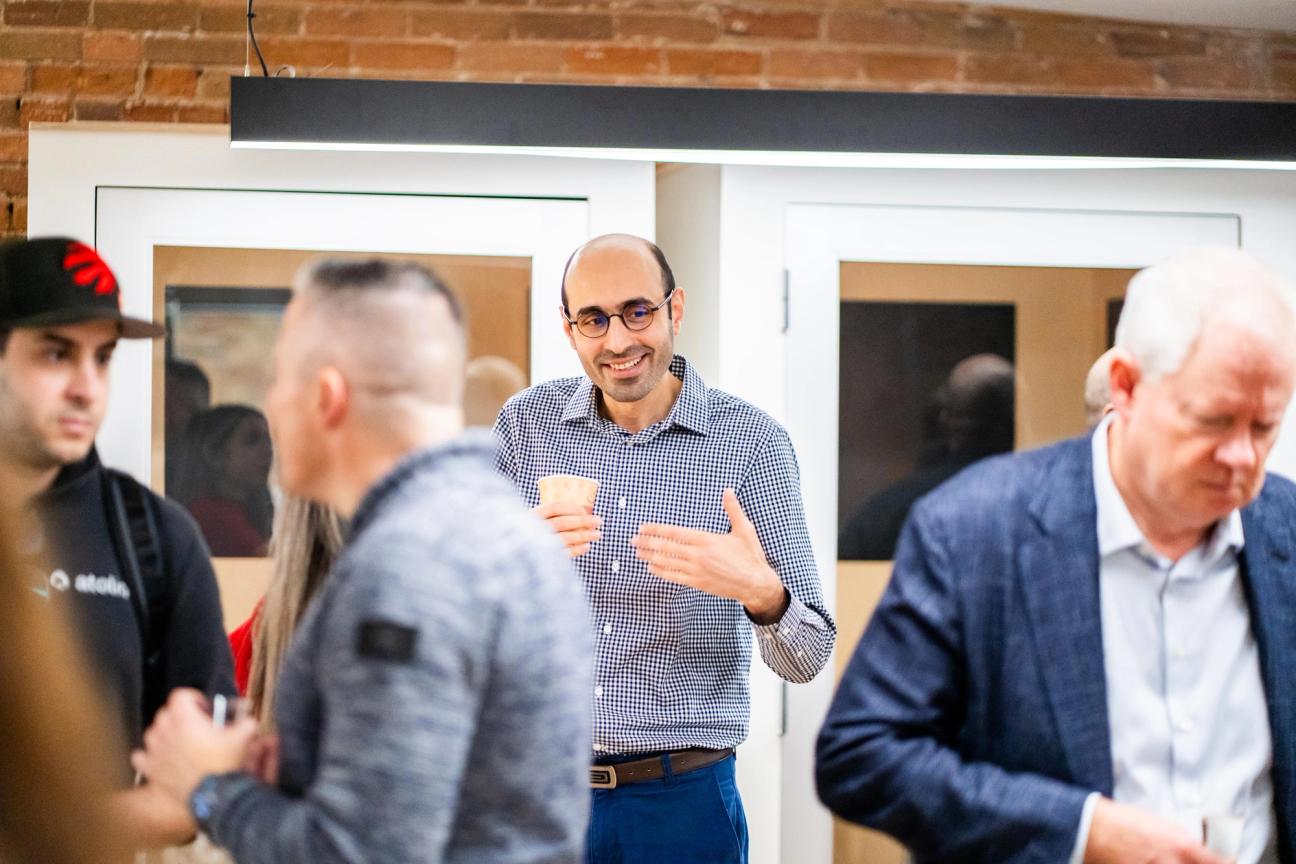
Mehdi Masoumi founder of Deaf AI

The importance of mentorship

Success in AI relies on clarity, quality, and purpose. With a high failure rate for GenAI projects across the industry, the need for mentorship and building valuable connections is more critical than ever.
Our program opened the door for FastDoc and DeafAI to have conversations with experts across business planning, technology, HR, and legal to ensure their startups could continue to build.
A key takeaway from our experience running the Adapting for Tomorrow program is that building a startup is a long, unpredictable journey that starts with a single act of bravery. As Simon Haighton-Williams, CEO of The Adaptavist Group, remarked at our closing ceremony, the startup landscape is notoriously tricky, especially in a market as hyped and oversaturated as AI, and the hardest and most important step for any innovator is to just start.

Are you a talented startup looking to take the next step?

We are opening applications for the next Adapting for Tomorrow program very soon.